
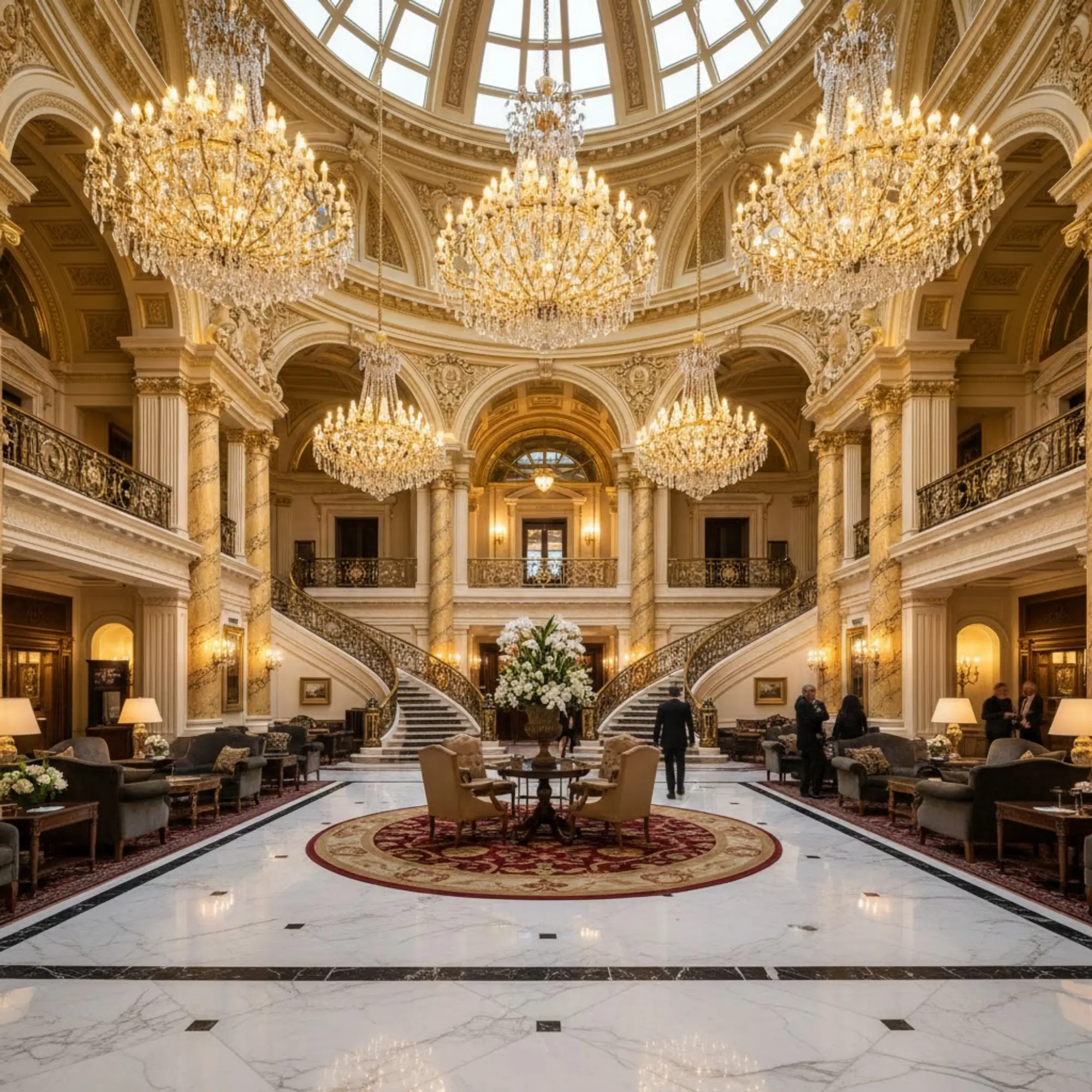
When a hotel brand expands from one property to multiple locations, expectations rise dramatically. Guests expect the same comfort, the same experience, and the same standards—regardless of city or country.It lies in hospitality procurement.
Yet expansion often introduces inconsistency.
Room elements feel slightly different.
Amenities vary subtly.
Operational friction increases.
The difference rarely lies in architecture or management.
Behind every consistent guest experience is a structured procurement system designed to scale. Without it, even the most premium brands struggle to maintain uniform luxury.
Why Expansion Challenges Hotel Brand Consistency
Single-property hotels operate with flexibility. Multi-property brands operate under pressure.
As portfolios grow, procurement complexity increases:
- Multiple local suppliers
- Regional sourcing variations
- Inconsistent quality benchmarks
- Fragmented compliance standards
Without a centralized hotel procurement strategy, brand identity begins to dilute.
Guests may not consciously detect inconsistencies, but they feel them. Over time, this affects hotel brand consistency, loyalty, and pricing power.
The Problem with Transactional Hotel Sourcing

Many hotel groups initially manage growth through decentralized hotel sourcing models.
Properties independently select vendors.
Procurement focuses on price negotiation.
Orders are placed reactively.
This approach creates short-term flexibility but long-term instability.
Common symptoms include:
- Inconsistent linen quality
- Variation in amenities
- Ingredient performance shifts
- Increased operational complaints
Transactional sourcing cannot sustain premium brand positioning.
The Shift Toward Strategic Hospitality Procurement
Leading hotel brands recognize that procurement is not an operational department—it is a strategic function.
Modern hospitality-procurement focuses on:
- Standardized specifications
- Batch-based continuity
- Season-aware planning
- Centralized quality controls
- Long-term sourcing partnerships
Instead of asking, “Where can we buy this cheaper?”
They ask, “How do we ensure this performs the same everywhere?”
That shift changes everything.
Building a Standardized Procurement Framework

To achieve uniform luxury, multi-property brands often implement five core elements:
1. Centralized Standards
Clear specifications define:
- Textile composition
- Amenity quality
- Ingredient grade
- Packaging and presentation
Every property follows identical guidelines. This protects hotel brand consistency across regions.
2. Batch-Based Production Planning
Batch continuity ensures that:
- Linens feel identical across properties
- Ingredients perform predictably
- Amenities maintain uniform finish
Without batch alignment, variation becomes inevitable.
Batch-based sourcing is one of the most powerful tools within modern hospitality supply chain management.
3. Season-Based Sourcing Strategy
Seasonal raw material shifts affect:
- Fabric durability
- Ingredient aroma
- Product longevity
Strategic procurement anticipates these changes rather than reacting to them. A forward-looking hotel procurement strategy integrates season-based planning into ordering cycles.
4. Centralized Quality Control
Quality is verified before distribution.
This includes:
- Pre-shipment inspections
- Specification matching
- Documentation validation
- Compliance checks
Centralized oversight eliminates property-level inconsistencies.
5. Long-Term Export & Sourcing Partnerships
Instead of rotating vendors, successful brands build partnerships.
Long-term collaboration enables:
- Better forecasting
- Shared accountability
- Transparent production processes
- Coordinated logistics
These relationships stabilize the hospitality supply chain.
How Standardized Hospitality-Procurement Impacts Guest Experience
When procurement systems are aligned, guest experience stabilizes.
The impact becomes visible through:
- Consistent tactile comfort
- Predictable dining quality
- Uniform room presentation
- Reduced service complaints
Guests may not notice procurement systems—but they immediately notice consistency.
Uniform luxury strengthens trust.
Operational Benefits Beyond Brand Perception
Standardized hospitality procurement delivers more than aesthetic consistency.
It reduces:
- Emergency sourcing
- Vendor disputes
- Quality escalations
- Cross-property variation
It improves:
- Forecast accuracy
- Inventory control
- Cost predictability
- Supplier accountability
Well-structured hospitality supply chain management transforms procurement from reactive to proactive.
A Comparison: Decentralized vs Standardized Procurement
| Decentralized Sourcing | Standardized Hospitality Procurement |
| Property-led decisions | Centralized standards |
| Price-focused | Performance-focused |
| Inconsistent batches | Batch continuity |
| Vendor switching | Long-term partnerships |
| Reactive buying | Strategic planning |
| Brand variation | Brand stability |
How Procurement Enables Scalable Growth
Multi-property brands often struggle with expansion because operational systems lag behind development.
Without procurement standardization:
- Each new property introduces variation
- Guest expectations fragment
- Internal alignment weakens
With structured hospitality-procurement, growth becomes scalable.
New properties integrate into existing systems.
Standards remain intact.
Brand identity remains strong.
Procurement becomes a growth enabler.
Why Hospitality Supply Chain Management Is Now a Leadership Priority
In modern hospitality, supply chain decisions affect:
- ESG compliance
- Sustainability claims
- Brand reputation
- Financial performance
Executive leadership increasingly recognizes procurement as a strategic pillar.
Strong hospitality supply chain management ensures:
- Transparency
- Compliance
- Resilience
- Consistency
It protects both operational continuity and market positioning.
Lessons for Hotel Leaders
For hotel groups seeking uniform luxury, the path forward includes:
- Elevating procurement to strategic leadership level
- Defining centralized sourcing standards
- Building long-term supplier partnerships
- Integrating batch and season planning
- Measuring supplier performance regularly
These steps convert procurement from cost center to brand guardian.
Conclusion
Luxury is not defined by isolated excellence—it is defined by repeatable excellence. Hospitality -procurement is the invisible framework that ensures every property delivers the same standard, every time. When supported by strong hotel sourcing systems and disciplined hospitality supply chain management, procurement becomes the foundation of scalable growth and lasting hotel brand consistency.
FAQs
Hospitality-procurement refers to the structured sourcing and management of goods and services that ensure consistent quality across hotel properties.
Centralized standards and batch-based sourcing ensure a uniform guest experience across multiple locations.
Hotel sourcing determines quality consistency, supplier accountability, and operational stability.