

Table of Contents
Introduction: Why Hotel Sustainability Standards Are Harder to Maintain at Scale
Hotel sustainability standards are becoming central to brand positioning, investor confidence, and regulatory compliance. However, maintaining consistent sustainability performance across multiple properties is significantly more complex than implementing initiatives at a single hotel.
As hotel brands expand across regions and countries, differences in vendors, regulations, operational practices, and local procurement decisions create variation. Without a centralized hospitality sustainability strategy, sustainability efforts become fragmented.
The challenge is not ambition.
The challenge is consistency. Luxury and multi-property brands must move beyond isolated green initiatives toward system-driven sustainability compliance in hotels.
Why Sustainability Consistency Matters for Multi-Property Brands

For single hotels, sustainability initiatives can be managed locally. For multi-property hotel management, sustainability must be systematized.
Inconsistent hotel sustainability standards lead to:
- Brand credibility risks
- ESG reporting inconsistencies
- Operational inefficiencies
- Increased regulatory exposure
- Guest trust erosion
Modern travelers expect environmental responsibility to be embedded—not occasional. Consistency strengthens both compliance and reputation.
The Shift from Initiative-Based to System-Based Sustainability

Many hotels begin with visible sustainability actions:
- Reducing plastic use
- Energy-efficient lighting
- Water-saving fixtures
- Linen reuse programs
While valuable, these initiatives do not guarantee scalable results.
A true hospitality sustainability strategy integrates:
- Procurement controls
- Supplier standards
- Compliance tracking
- Operational audits
- Centralized reporting
Sustainability becomes measurable, not symbolic.
Sustainable Hotel Sourcing as the Foundation
Sustainability begins upstream.
Sustainable hotel sourcing ensures that:
- Suppliers meet environmental standards.
- Materials comply with regulatory requirements.
- Products support lifecycle efficiency.
- Vendor certifications are verified.
Without structured sourcing standards, properties make independent purchasing decisions that compromise uniform sustainability goals. Centralized sourcing policies reduce risk and improve alignment across properties.
Building Effective Hotel Compliance Systems

Strong hotel compliance systems ensure that sustainability commitments translate into operational practice.
These systems should include:
- Defined environmental benchmarks
- Vendor qualification protocols
- Digital compliance documentation
- Internal audit schedules
- Performance dashboards
Compliance systems transform sustainability from a marketing narrative into enforceable policy.
1. Standardized Procurement Guidelines
Procurement decisions influence:
• Carbon footprint
• Waste generation
• Resource efficiency
• Supply chain ethics
Standardized procurement ensures:
• Approved sustainable suppliers
• Defined material specifications
• Lifecycle-focused purchasing
• ESG-compliant sourcing
This aligns sustainable procurement in hotels with long-term brand strategy.
2. Supplier Audits & ESG Verification
Sustainability performance depends heavily on suppliers.
Hotels must implement:
• Vendor environmental audits
• Certification verification (ISO, FSC, etc.)
• Periodic compliance reviews
• Documentation transparency
Supplier oversight reduces reputational and regulatory risks.
3. Centralized Sustainability Reporting
Multi-property brands require unified data.
Centralized reporting allows:
• Tracking energy consumption
• Monitoring water usage
• Measuring waste reduction
• Standardizing ESG disclosures
Without shared reporting frameworks, hotel sustainability standards vary from property to property.
4. Operational Training & Accountability
Policies alone are insufficient.
Operational teams must understand:
• Sustainable handling procedures
• Resource conservation methods
• Compliance documentation requirements
• Performance benchmarks
When sustainability is embedded into daily workflows, long-term stability improves.
5. Risk Mitigation Through Structured Systems
Regulatory landscapes evolve constantly.
Hospitality brands operating internationally must address:
• Local environmental regulations
• Waste management laws
• Water-use restrictions
• Supplier compliance obligations
Structured hotel compliance systems reduce exposure to fines, reputational harm, and operational disruptions.
Comparison: Fragmented vs Centralized Sustainability Approach
| Fragmented Approach | Centralized Sustainability Strategy |
| Property-led decisions | Brand-level standards |
| Inconsistent sourcing | Sustainable hotel sourcing policy |
| Limited reporting | Centralized ESG dashboards |
| Reactive compliance | Proactive risk management |
| Brand variation | Uniform sustainability identity |
Consistency builds trust.
How Sustainability Supports Brand Consistency

Brand consistency in hotels depends not only on design and service but also on values.
Guests increasingly evaluate:
- Environmental responsibility
- Ethical sourcing
- Transparency in sustainability claims
When hotel sustainability standards are enforced uniformly, brand credibility strengthens.
Consistency across multiple properties signals leadership.
Long-Term Benefits of a Strong Hospitality Sustainability Strategy

Investing in structured sustainability systems delivers measurable advantages:
- Lower operational waste
- Improved energy efficiency
- Enhanced investor confidence
- Stronger regulatory compliance
- Higher guest loyalty
Sustainability becomes a growth driver—not a cost center.
Integrating Sustainability with Financial Performance
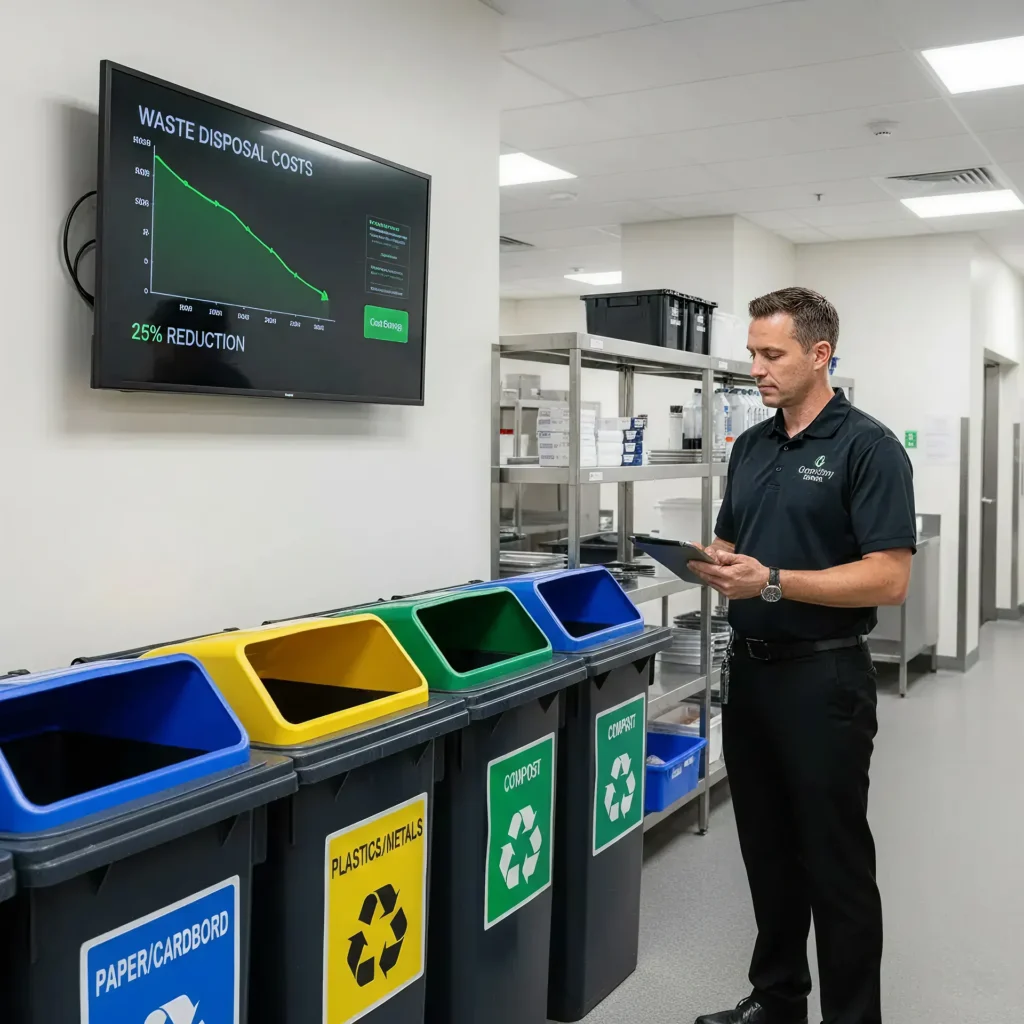
Contrary to perception, sustainability does not necessarily increase cost.
Efficient resource management reduces:
- Utility expenses
- Waste disposal fees
- Replacement frequency
- Compliance penalties
Strategic sustainable hotel sourcing aligns environmental and financial objectives.
Why Leadership Commitment Is Critical

Without executive alignment, sustainability remains fragmented.
Leadership must:
- Define measurable sustainability goals.
- Align procurement with ESG objectives.
- Invest in compliance technology.
- Monitor long-term performance.
Sustainability systems require discipline, not just intention.
Conclusion
Hotel sustainability standards cannot rely on isolated initiatives or property-level interpretation. For multi-property brands, sustainability must be embedded into procurement, compliance systems, supplier management, and reporting frameworks. A structured hospitality sustainability strategy ensures consistency, reduces regulatory risk, and strengthens brand trust. In modern hospitality, sustainability is no longer optional-it is foundational to long-term operational stability and competitive positioning.
FAQs
Hotel sustainability standards are structured environmental and compliance guidelines that ensure responsible operations across properties.
Sustainable hotel sourcing ensures supplier compliance, reduces environmental impact, and supports long-term sustainability goals.
They standardize reporting, track performance, and ensure regulatory adherence across multiple locations.
Yes. Efficient resource management reduces waste, energy costs, and compliance penalties.